Admissions Blog

Undergraduate Admissions Uncensored

  • admissions.blog

January Application Deadlines Are Just a Bad Idea

Posted on November 7, 2021 by Patrick O'Connor Leave a Comment

The story is worth hearing, and even listening to again.  You came home from college for the holidays, and Mom or Dad was preparing the traditional roast.  You’d somehow eaten this dish a thousand times without ever seeing it prepared, so you were horrified and fascinated to watch them lop off a half pound or so from the back of the roast and toss it in the trash—perfectly good food.  You composed yourself enough to make asking why they did this sound downright casual.  “My mother made it this way” was the response—and it was just too convenient that the mother in question was also in the room.  “That’s right” she added, “and my mother made it the same way.”

The resolution of the issue had to wait until Sunday, when great grandmother joined the family for dinner.  Seated at the table with the roast right in front of everyone, the sensory elements were perfectly aligned to ask the question- why cut the roast?  “I learned to do that from my mother.  The pan we had was too small for a full roast, so we always had to trim it to size.”

And there is the fascination.  No other generation had the same limitation of pan or oven, but the roast trimming continued without questioning or consideration for three generations.

It shouldn’t be too much of a stretch to consider just how many implications this tale of roast trimming exist in college admissions, and nowhere is that more clearly the case than with application and notification deadlines.  Long before any kind of Internet presence, January 1 was an application deadline for hundreds of colleges.  Remarkably enough, this pre-high tech deadline didn’t make much sense even back then, since the deadline was a postmark deadline, but post offices were never open on New Year’s Day—in fact, depending on how small your town was back then, post offices across smalltown America were hard to find open after noon on the 31st.

Postmark deadlines are now a thing of the past, but there are other issues to consider with January 1.  A clear number of high schools close for the holidays around December 23 if not sooner.  This leaves most students largely on their own to put the finishing touches on the first major, multi-component task they’ve had to negotiate in their young lives—that, or it compels counseling offices everywhere to assemble some makeshift effort to offer support here and there at a time when counselors most need a break of their own. (Although there was one high school who was floating a “guarantee” that every counselor would check their email every day of the December break, thus denying everyone a chance to rest and recover.  Talk about a happy new year…)

Even the efforts to offer some kind of support over vacation can miss the mark, especially for students who are the first in their family to apply to college.  I am not a disciple of the “applying to college is rocket science” school, nor do I believe young people learn much about deadlines by treating them like they are amorphous, when they are not.  Still, given that this is the first major multi-tasking activity most young people have that has a fairly big consequence attached to it, it isn’t unreasonable to hope the deadline would permit them the chance to have counsel—and even more important, face-to-face support—to complete the task, something a finger-wagging “just plan ahead” overlooks in a brazen, cold way.  If we then add on the fact that nearly every admissions office is empty and unavailable for student support on January 1st, it’s easy to see every director of admission with carving knife in hand, ready to lay waste to a couple of pounds of perfectly good applications, all in the name of “we’ve always done it this way.”

At the risk of sounding like someone who has never run or even worked in an admissions office, the answer seems simple—this is a practice that needs to stop.  The easiest alternative would be requiring all materials to be submitted by the second Tuesday in January, a time when even the most luxurious of December vacations is over, where students have had time to seek the help they need, and everyone has had time to refresh their energies in a meaningful way.  Doing something challenging doesn’t mean it has to be inhumane, and the family man in me suggests that, for as much as I value the lessons learned in applying to college, there are more important things to consider over the holidays, like developing a strategy for a successful entry in the annual family gingerbread building contest.  This is the final holiday of youth, and it deserves recognition, and space, as such.  It’s possible to do that and develop a strong college portfolio, given the right deadline.

This isn’t the only deadline that could use some attention.  November 1, November 15, and May 1 all landed on a Sunday last school year, leaving students with a couple of days to do the best they could with what little they knew.  Again, this is especially true for students whose family has no experience applying to college.  Since these students tend to come from urban and rural schools where counseling ratios are typically astronomical, it’s easy to hope colleges would want to nurture applications from these populations, rather than throw more barriers in the way of these talented, but raw, applicants.

There are many other facets of the college application process where roast trimming can apply, especially when considering every facet of the application is easier for students who come from a background of wealth.  This aspect seems easy enough to start with, since its effects are easy enough to understand.  Let’s put the January 1 deadline and its impact back in its sheath.

To The Media: End the College Application Nightmare Stories

Posted on August 3, 2021 by Patrick O'Connor Leave a Comment

It figures that August 1 landed on a Sunday this year.  What used to be just another beach day took on special significance a few years ago, when Common Application chose August 1 to launch its updates for the coming school year.  It’s exciting to be sure, but with a hint of melancholy, as a few overly enthusiastic parents use the occasion to tell their high school seniors “Summer’s over”, while the seniors meekly head towards the nearest computer, even on a weekend, muttering “But what if I don’t want it to be?”

Happily, more than a few colleges agree with the seniors.  While there was a stream—OK, a torrent—of colleges Twittering students on Sunday to hurry up and apply, more than a few colleges said “Start today if you want to, but our deadline isn’t until January.  Take your time.”  I had planned on thanking each of those colleges for posting such a message in the face of application mania.  I’m pleased to say there were too many to do so.

But this is just the start, and here’s hoping more colleges get on board.  The last two years of schooling have left this year’s seniors in pretty bad shape.  Day after day of waking up to find out if school is in person, online, both, or neither may have left them flexible, but it has also left them exhausted.  Students who fit every element of one (and certainly not the only) likely college-bound profile—from the suburbs, in a college prep curriculum, with two well-off parents who went to college—are saying out loud they just don’t think applying to college is worth the hassle.  That’s not because of the Delta rebound; it’s because their last couple of years of school have left them unsure of themselves and their ability to control their destiny.  Since any college admissions rep will tell you the key to a successful application is to let the student drive the bus, this is a huge problem.

Part of the solution lies with us.  August is peach and melon season in Michigan, a time when very rational people who never eat fruit feel a swelling in their taste buds that can only be satiated by interaction with produce that is truly a little slice of heaven.

This same thirst wells up in the media every August, but it isn’t for fruit—it’s for stories about the confusing, terrifying, uncertain world of college admissions.  With a new crop of high school seniors every year, journalists eagerly seize on their newness to college admissions, highlighting profiles of bright young people who find themselves flummoxed over how to apply to college, and when to apply to college.  Curiously, these stories rarely display a student’s confusion over where to apply to college, since the media only covers students who are considering the same 25 colleges ever year that admit about 5 percent of their applicant pool.  “She’s a National Honor Society president, but she can’t get her arms around Yale’s application.” Of course, these same students would be equally baffled by using a plumber’s wrench for the first time, and they easily get the hang of this college thing two weeks into the process.  But apparently, that’s not the point. The very first time they do something new, they don’t completely understand it.  My goodness.

The impact of this approach to college application coverage can’t be understated.  Thousands of students have already had to give up most of their summers at the insistence of parents who have caught the angst early, eager to make sure that college essay sparkles, unaware that the number one cause of weak essays isn’t underwriting, but overwriting.

Parents who haven’t been on their seniors about college since Father’s Day read these August articles and panic, fearing their child is now “behind”.  They plop their senior in front of a computer screen and tell them they can’t come out until an application is finished—for a college that doesn’t even start reading applications until January 10.

Parents whose children really understand themselves, and had no intention of applying to these schools, now feel their child is “losing out” on something, and suddenly insist that an application or two to the Big 25 is a good idea, “just to see what happens”, even though their student is well aware of what will happen.

This brand of media attention has never served high school seniors well, and it’s likely to make matters even worse for this year’s seniors, who are looking to gain their footing after two years of scholastic uncertainty.  In the interest of their well being—or, to use a phrase that is on the verge of becoming unimportant due to its overuse, their mental health—how about a few less media stories on the impossibility of getting into college and its excessive expense, and a few more stories about the 75% or so of colleges who admit more than 50% of their applicants, and the many colleges who are forgiving institutionally-based student loans?  Could the media finally discover the urban and rural colleges whose buildings have not a hint of ivy that are turning around the lives of students who didn’t have the opportunity to take 7 AP classes in high school, students who are shining academically?  How about the students who are making community college work, earning a degree that costs less from start to finish than one year of Harvard, all while the students typically work about 30 hours a week?

It’s certainly true many people turn to the media to read stories that will fuel their dreams—that’s why so many people follow the Olympics, and replay the video of the woman who was reunited with her dog after two years.  But stories about the uncertainty of the college selection process don’t feed students’ sense of the possible; they nourish their nightmares.  They’ve had enough of that these past two years, and may be headed for more.  The best thing the press can do for them, and for our society, is to admit there are more than 25 good colleges in this country, and wake the students to a better vision of how to apply to college, other than run a gauntlet that, at the end of the day, is largely of the media’s own making.

The Advantages of Open Admission

Posted on July 12, 2021 by Craig Meister

Imagine a barn door that never closes. When a college practices Open Admissions the college admits all applicants with a high school diploma or GED, although some programs, such as nursing, might limit enrollment. In addition to an easy path into the college, Open Admission colleges often accept students right up until classes begin each term. Learn more about the many advantages of applying to an open admission college.

All About Early Action: Restricted/Single-Choice & Unrestricted

Posted on July 8, 2021 by Craig Meister

When you apply to a college or university Early Action you are submitting your application by a specific early deadline and will receive your decision earlier than regular decision, usually, though not always, before the end of December. Although you may be admitted early, you are not committed to enroll at that college. Yet, there are two types of Early Action:

EA Unrestricted – when you are free to apply to more than one college with “Early” plans at the same time.

EA restricted (REA) or single choice – when you are not allowed to apply to other colleges with “Early” plans at the same time (though usually with carve outs for public colleges and universities).

Always read the fine print of the admissions plan you are agreeing to before you sign and submit anything to a college or university.

AP Exams Aren’t Worth the Hype and Hysteria

Posted on July 5, 2021 by Craig Meister

Taking and doing well on Advanced Placement Exams could earn you some college credits, but they shouldn’t influence the grade you earn in your AP Classes and they rarely are factored into college admissions decisions.

Sadly, many high schools pressure students to freak out about these exams; yet, the exams themselves have limited utility to the vast majority of high school students. These exams do make the College Board and schools a lot of money.

What Needs to Change in College Admissions

Posted on June 3, 2021 by Patrick O'Connor 1 Comment

The ups and downs of the quarantine gave college admissions officers and school counselors a taste of application life to come, as the birth rate for high school graduates continues to slide, and the need to develop new approaches to recruit students increases.  As the profession continues to try and improve college access, and knowing that small differences can make a big difference, here are some considerations for both sides of the desk to ponder this summer over a well-deserved glass of lemonade:

Colleges—move your deadline dates.  November 1 (early applications), January 1 (regular applications), and May 1 (many deposits) are all big dates in the college application world—and they all fell on a Sunday or a holiday this year.  I don’t understand this, since the admissions offices weren’t open, and the vast majority of high school seniors had no access to counselors or other application helpers the day of and before the deadlines.

This needs to change.  Yes, students need to be responsible, and should learn to plan ahead—but perhaps that lesson is better applied to deadlines for things they’ve done before (like papers), not with things they are doing for the first time (like applying to college).  The first Tuesday in November, the second Tuesday in January, and the first Tuesday in May would solve this problem nicely, increasing the quality and quantity of applications to boot. Georgia Tech made the move, and they get kaboodles of applications.  It’s an easy, but important, change.

High Schools—stop working holidays.  Moving the January 1 deadline to a date when high schools are in session is also overdue for school counselors, who have taken a serious shellacking this year with all the student mental health issues arising from COVID.  School counselors have always been overworked, but never able to use the December holidays to recover, since they were expected to help their students make January 1 college deadlines.

It’s time to take a stand.  Assuming the colleges move their deadlines, counselors need to learn to let go.  Send a note to all senior families early in November, letting them know your vacation is—well, a vacation.  If you really can’t let go of your students for that long—or if the colleges unwisely cling to January 1– set two days of vacation for online office hours, and take a breath all the other days.  You have mastered online office hours this year.  Let them be your friend.

Colleges—keep innovating.  One (and perhaps the only) upside of the quarantine was the ability of college admissions offices to adapt major chunks of their traditional approach to recruitment. Test optional, drive-thru tours, and online high school visits suggested it might be OK for everyone to get their hopes up, that some real college admissions reform was in the air.

Yes.  Well.

In a post-vaccine world, we see more signs of returning to “normal” than creating new normal.  Reinventing the entire admissions process is no easy feat, to be sure, but how hard might it be for admissions offices to spend half a day this summer doing “What ifs” to one part of the application process?  Do that for five years, and you have a new admissions paradigm, and a more accessible one—the thing you say you keep wanting.

High schools— mental health and college access aren’t either/or.  I will legitimately blow my top if I read one more post from a high school counselor insisting that the increase in COVID-related mental health needs makes it impossible to do any effective college counseling.

School counseling as a profession has long been showing a mental health bias at the expense of quality college counseling, and this year just seems to have widened the gap.   Counselor training programs plant the seeds of this bias— training programs devote about 7 classes to mental health training, and none to college counseling—and all of this must stop, if only because the dichotomy is a false one.

Discouraged, depressed high school students light up like a hilltop church on Christmas Eve when I tell them college gives them a fresh start to life and learning, proof enough that college counseling affects mental health.  That, plus the American School Counselor Association says college counseling is part of the job.  Counselors truly are overworked, so they can’t do everything they want in any part of counseling.  That said, college can still be part of a key to a better self.  More counselors need to see that, and act on it.

Everyone—stop beating up on the Ivies.  The Ivies and their equally tough-to-get-into institutions largely decided to go test optional this year.  For some reason, this gave a lot of students with B averages the hope that they too could pahk the cah in the yahd, now that they didn’t have to reveal their test scores.

So—more students applied to the Ivies this year than last year.  The Ivies didn’t admit more students this year than last year.  That means their admit rate had to go down, and more students were denied.

That isn’t news—it’s math.  And if you want to blame the Ivies for encouraging students to apply who didn’t really stand a chance of getting in, you’re going to need to make a thousand more jackets for that club.  If you think the Ivies take too few Pell-eligible students, say that.  If you think they admit too many legacies, stay that.  But don’t beat them up for proving the laws of basic ratios.  Any other college in their shoes would have to do the same thing. (Besides, it’s the national media who has left our society with the impression that there are only 25 colleges in America.)

Everyone—about Kiddos.  It’s no secret that college is largely a time of youth, especially with the expansion of adolescence into the early twenties and beyond. But college is also a time to help young people embrace the opportunities of adulthood, skills and attitudes that sometimes require setting the desires of self to one side.

This goal would be more easily achieved if we saw students—and if they saw themselves– as capable of embracing a larger sense of self by referring to them as students, not Kiddos.  They don’t need to grow up in a hurry or, with the right kind of help, succumb to the media images of college choice as a high stakes pressure cooker.  But they also need something more than just a pat on the head and a verbal affirmation that’s the equivalent of a lollipop. Let’s try calling them students.

University of Arizona Pushes Test Optional Goal Posts Even Further

Posted on April 15, 2021 by Craig Meister Leave a Comment

When high school students apply to the University of Arizona for the 2022-23 academic year, SAT and/or ACT scores will not be required for admission or merit aid consideration. In addition to university admissions, neither the ACT or SAT will be necessary for application to Arizona’s selective academic colleges, including its Honors College.
How will University of Arizona award merit scholarships? Merit scholarships for the upcoming academic year will be awarded based on students’ core, unweighted GPA (Core GPA is based on ABOR’s academic coursework competency requirements) through their 6th semester of high school.

What if students want to submit their test scores? If they like, students can still submit test scores to supplement their application for admission. These scores may help clear any application coursework deficiencies and will be used to help, not hinder, an admission decision; however, including them is entirely optional.

How will course rigor be recognized? Arizona values the rigorous curriculum that students take to prepare for collegiate academics. Through the application process students have the opportunity to report a level of rigor for the sixteen core competencies and may also be eligible for the Dean’s Exemplary Award.

When can students begin applying for admission? University of Arizona’s application for summer/fall 2022 will open in just a matter of weeks – July to be exact. Arizona offers Rolling Admissions, which means that the sooner students apply the sooner they will receive their admissions decisions. Every year I work with students who apply to Arizona in August and get an admissions decision no later that early October, and every year some of my students are be happy to learn that all they have to do is apply to Arizona to be considered for one of its merit scholarships. No extra applications are required.

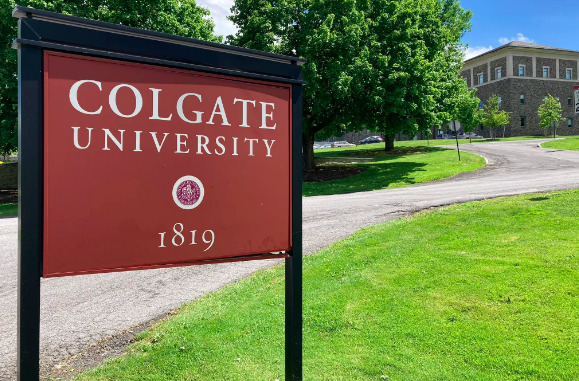
Colgate’s 2021 Admissions Stats

Posted on April 6, 2021 by admissions.blog Leave a Comment

Colgate University’s Class of 2025 is going to look a bit different than its Class of 2024 thanks in no small part to Colgate’s decision to go test-optional. Colgate is happy to brag that total applications for the incoming fall class shattered all previous records: 17,537 (a 104% increase over last admissions cycle) students applied and thirty percent of these students identified as “domestic multicultural” otherwise known as applicants from inside the U.S. who didn’t check “white” on the Demographics page of the Common App.

Here are some more “highlights” from Colgate’s 2020-2021 admissions cycle (as of 3/25/21, thus action taken on waitlisters in the weeks since late March won’t get counted below):

Applicants
17,537 total applications
30% identify as domestic students of color
41% included test scores

Admitted Students
3,011 admitted (17% acceptance rate)
60% of the class was admitted EDI or EDII
3.88 is the average GPA
60% included test scores
32% identify as domestic students of color
50 states + D.C. and 53 countries (citizenship) represented

Thus, Colgate remains a heavy user of ED to lock in super fans. The more things change, the more they stay the same.

What the death of SAT Subject Tests means for strong high school students

Posted on January 30, 2021 by Craig Meister Leave a Comment

What are high achieving members of the high school Class of 2022 and younger to do now that SAT Subject Tests are no more?

That’s the question many of my students have been asking me since the CollegeBoard pulled the plug on the rigorous one-hour content-based tests that at one time covered everything from Biology to Writing. In more recent years, the Writing Subject Test was subsumed into an optional section of the main SAT, but with the news that all SAT Subject Tests were being cancelled also came word from CollegeBoard that the optional Writing section of the SAT would also be canned. So much for the importance of writing, at least from the perspective of the powers that be at both the CollegeBoard and most American colleges, none of which made so much as a peep opposing the CollegeBoard’s decision to no longer attempt to assess students’ writing.

Oh well, I don’t make the rules; I simply help students play the game, and what a perverse game the American college admissions process has become.

Below are my first thoughts about what students can and should do to pump up their chances of college admission now that a very important objective measure of knowledge mastery has fallen by the wayside.

Amherst Shares Latest Admissions Stats

Posted on January 19, 2021 by admissions.blog 14 Comments

Amherst College received 857 Early Decision (ED) applicants this admissions cycle, which represents a forty-three percent increase over last year. This led to a twenty-five percent ED admit rate, which is down from a thirty-two percent ED admit rate last year.

This news came from Cate Granger Zolkos, Amherst’s Dean of Admission. As a result of the application increase, Amherst expects forty-five percent of its Class of 2025 will be drawn from its ED admits (up from thirty-nine percent last year). Meanwhile, 13,930 students applied to Amherst Regular Decision (a thirty-one percent increase over last year).

In other news, Amherst has announced that for domestic Early Decision applicants this fall, a whopping forty-five percent applied without testing (test-optional) and a full thirty-nine percent of Amherst’s ED admits were test-optional. Among all Regular Decision applicants, forty-nine percent have applied test-optional. With the applications flooding in, Amherst will continue to be test-optional for high school seniors applying during the 2021-2022 and 2022-2023 admissions cycles.

At some point before the 2023-2024 admissions cycle Amherst will evaluate whether the test-optional policy will remain in place permanently.

  • « Previous Page
  • 1
  • …
  • 5
  • 6
  • 7
  • 8
  • 9
  • …
  • 14
  • Next Page »

Subscribe to our mailing list

Trending Posts

The top 23 songs to listen to while completing your college applications are…

Comparing Undergraduate Life at University of Oklahoma and Oklahoma State University

How to get into the Ivy League – Ethically

How to Deal with Anxiety During College Admissions (Especially Now)

Most Overrated Private University and Public University in America

Is AP Environmental Science a Joke or Justifiable?

2025 Admissions Cycle Brings Change at US Naval Academy

AP vs. IBDP. Which is best for you?

USC Expands Early Decision, Eliminates Common App Courses & Grades Section for First-Year Applicants

First Impressions of Digital SAT

Another Reason Why Your Common Application Essay is So Bad

Building Your Best College List

University of Miami Just Made It Easier to Apply – But Harder to Get In

5 Smart Summer Tips for Wise Rising Seniors

10 Best Colleges for Smart Skiers and Snowboarders in North America

Many high school counselors mean well but…

Tulane’s acceptance rate is 13%. Only 34% are male.

5 American Colleges with the Most Grueling Standardized Testing Requirements for First-Year Applicants

Dear 12th Grader: Don’t Blow Your Ivy Chances Now

This is what Affirmative Action and Test-Optional looks like at University of Wisconsin-Madison

You CAN apply Restrictive Early Action and Early Action under the right conditions

Oh, Canada! The Definitive List of Canadian University Application Deadlines

Wesleyan University Ends Legacy Preferences in Admissions

Making the most of the summer before senior year

Northwestern Releases Regular Decisions, Class of 2027 Statistics

30 Summer STEM Camps for High School Freshmen

Top 5 Ways Applying to US Colleges is Different than Applying to UK Universities

UNC and a tale of one – make that four – acceptance rates

The Perfect Gifts to Celebrate Getting Into College

Search Posts By Topic

  • 3 Year Degree (3)
  • Accommodations (3)
  • Admissions Policies (133)
  • Admissions Statistics (90)
  • Advice & Analysis (482)
  • AI (1)
  • Alabama (2)
  • Amherst (3)
  • AP (6)
  • Applications (93)
  • Applying from India (1)
  • Arizona (4)
  • Arts (1)
  • ASU (1)
  • Austin College (1)
  • Babson (1)
  • Baylor (1)
  • Berry College (1)
  • Boston College (2)
  • Boston University (6)
  • Bowdoin (2)
  • Brown (6)
  • Bryn Mawr (1)
  • Business (2)
  • BYU (1)
  • Caltech (6)
  • Canada (2)
  • Career and Technical Education (34)
  • Case Western (4)
  • China (1)
  • CMC (1)
  • Coalition (13)
  • Colby (3)
  • College Costs (1)
  • College Counselor (18)
  • College Fairs (5)
  • College Life (38)
  • College List (40)
  • College List Deathmatch (5)
  • College Visit (26)
  • Colorado College (1)
  • Colorado School of Mines (1)
  • Columbia (7)
  • Common App (43)
  • Community Colleges (4)
  • Cornell (5)
  • Counseling (3)
  • COVID-19 (8)
  • CSS PROFILE (3)
  • CSU (1)
  • CSULB (1)
  • CU Boulder (2)
  • Cybersecurity (1)
  • Dartmouth (7)
  • Davidson (1)
  • Demonstrated Interest (17)
  • DePaul (1)
  • Dickinson (1)
  • Direct Admissions (1)
  • Duke (3)
  • Early Action (44)
  • Early Childhood Education (1)
  • Early Decision (46)
  • Education (8)
  • Educational Consulting (1)
  • Elon (2)
  • Emergency Management (1)
  • Emory (1)
  • Engineering (3)
  • Enrichment (18)
  • Entrepreneurship (2)
  • Environmental Science (2)
  • Essays (59)
  • Europe (7)
  • Exercise Science (1)
  • Exeter (1)
  • Experiential Learning (1)
  • Extracurricular Activities (37)
  • FAFSA (6)
  • Feature (2)
  • Financial Aid (31)
  • First Person (13)
  • Fly-In (2)
  • France (1)
  • FSU (1)
  • Gap Programs (2)
  • GED (1)
  • Georgetown (5)
  • Germany (2)
  • Gifts (3)
  • Gonzaga (1)
  • GPA (8)
  • Graduate School (22)
  • Hamilton (1)
  • Harvard (7)
  • Healthcare (3)
  • High School (25)
  • Higher National Diplomas (1)
  • HiSET (1)
  • IB (4)
  • IEC (1)
  • IELTS (1)
  • Indiana (3)
  • Industrial Hygiene (1)
  • International (9)
  • Internships (8)
  • Interviews (10)
  • Iowa (2)
  • Italy (2)
  • Ivy League (20)
  • JHU (3)
  • Journalism (2)
  • Kettering University (1)
  • Lafayette (1)
  • Law (4)
  • LD (1)
  • Lists & Rankings (8)
  • Loans (1)
  • Majors (18)
  • Marketing (1)
  • Math (1)
  • Medicine (1)
  • Mental Health (3)
  • Miami (1)
  • Middlebury (1)
  • MIT (7)
  • Montana State University (1)
  • Moving (1)
  • Naviance (2)
  • NCAA (3)
  • New Mexico State University (1)
  • News (129)
  • Northwestern (5)
  • Notification News (4)
  • Notre Dame (3)
  • Nursing (19)
  • NYU (3)
  • Of Note (17)
  • Ohio State (2)
  • Oklahoma (1)
  • Online Learning (18)
  • Open Admission (2)
  • Parents (7)
  • Penn (8)
  • Pharmacy (1)
  • Pitt (2)
  • Popular Posts (10)
  • Princeton (5)
  • Priority (2)
  • Professor of the Month (1)
  • PSU (3)
  • Psychology (3)
  • Public Universities (8)
  • Purdue (3)
  • Rankings (11)
  • Reader Questions (11)
  • Recommendations (10)
  • Regular (26)
  • Research (4)
  • Resume (20)
  • Rice (4)
  • Robotics (1)
  • Rochester (1)
  • ROI (5)
  • Rolling (5)
  • Rose-Hulman Institute of Technology (1)
  • Santa Clara University (2)
  • Scholarships (2)
  • SEL (1)
  • Sewanee (1)
  • Skiing & Snowboarding (1)
  • SMU (1)
  • Social Work (10)
  • Soft Skills (1)
  • South America (2)
  • Southwestern (TX) (1)
  • Spotlight Series (1)
  • SRAR/SSAR (1)
  • St. Edward's University (1)
  • St. John's College (1)
  • Standardized Tests (45)
  • Stanford (4)
  • STEM (2)
  • Stevens Institute of Technology (1)
  • Student Trips (1)
  • Summer (24)
  • Swarthmore (1)
  • Syracuse (1)
  • TASC (1)
  • Teacher Recommendations (8)
  • Temple (1)
  • Texas (4)
  • Texas A&M (1)
  • Ticker (26)
  • Trending Posts (35)
  • Trinity University (TX) (1)
  • Tufts (5)
  • Tuition (3)
  • Tulane (8)
  • UBC (1)
  • UC Berkeley (9)
  • UC Davis (3)
  • UC Santa Barbara (3)
  • UCAS (5)
  • UCF (1)
  • UCI (2)
  • UCLA (9)
  • UCSD (2)
  • UDub (1)
  • UF (4)
  • UGA (3)
  • UIUC (3)
  • UMass (3)
  • UMD (5)
  • UNC (2)
  • United Kingdom (8)
  • Universal College Application (1)
  • University of Chicago (3)
  • University of Dallas (1)
  • University of New Mexico (1)
  • University of Rochester (1)
  • University of Vermont (1)
  • USC (5)
  • USNA (1)
  • UT Austin (4)
  • Utah (2)
  • UVA (7)
  • Vanderbilt (2)
  • Video Game Design (1)
  • Villanova (3)
  • Virtual Information Session (1)
  • Virtual Visit (2)
  • Wake Forest (1)
  • Wash U (7)
  • Wesleyan (2)
  • Williams (3)
  • Wisconsin (3)
  • Work Study (1)
  • Yale (14)
  • ZeeMee (1)

News Tips | Write for Us | Sponsored Posts
All content © 2025 | Admissions.Blog
Terms of Service | +1 410-526-2558

Copyright © 2026 · Metro Pro Theme on Genesis Framework · WordPress · Log in