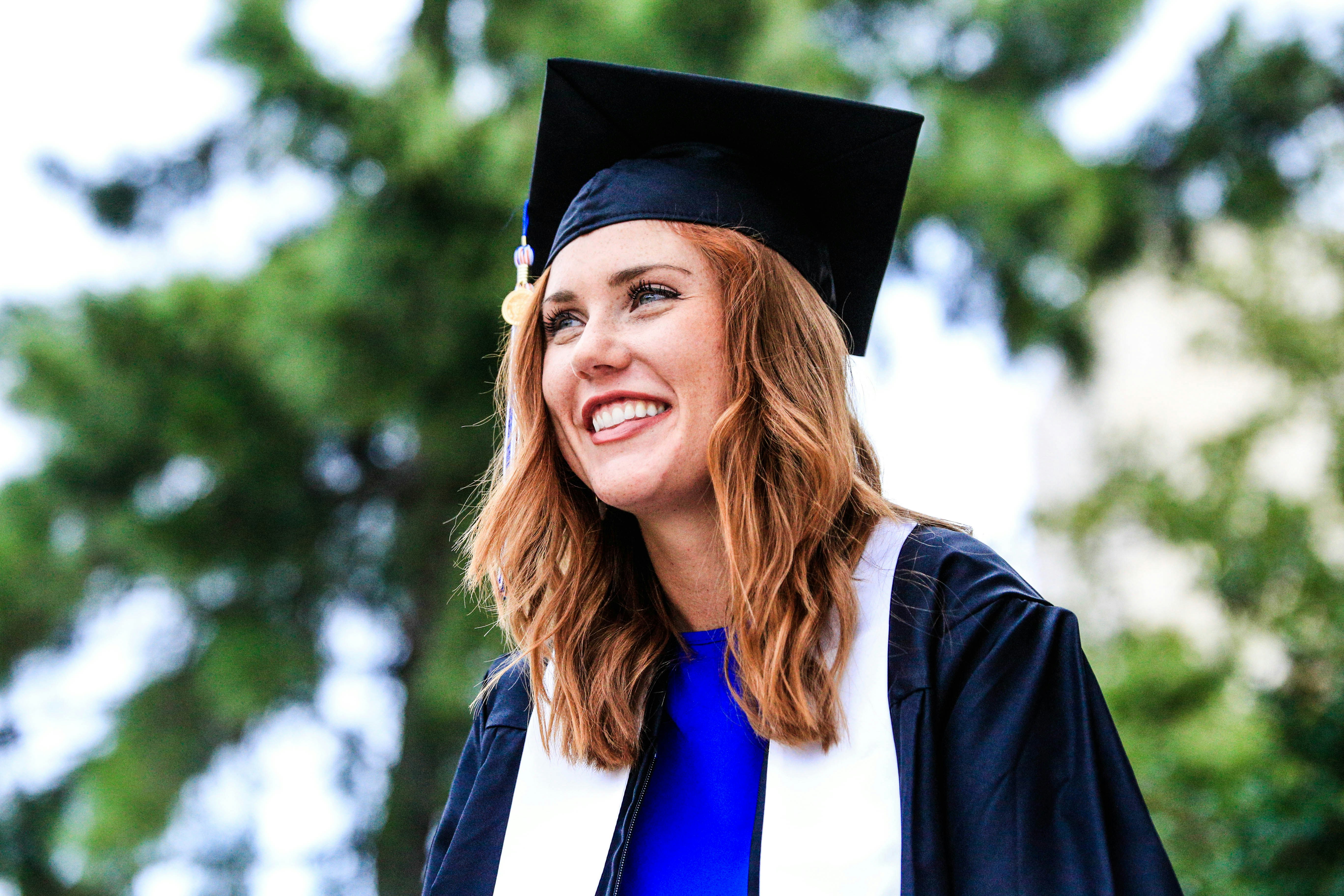
Packing up your life, taking two years away from a paycheck and signing over eighty grand in tuition for a master’s degree is officially a financial trap most people refuse to step into. Modern professionals are ditching traditional campus residency and aggressively choosing high-tier online programs that let them keep their income while leveling up their credentials.
The math on traditional graduate school used to be simple. You put your career on ice, moved to a college town, lived on ramen and student loans for twenty-four months and walked out with a framed piece of paper that magically doubled your salary. That equation is completely broken today. The cost of brick-and-mortar tuition skyrocketed, while starting salaries in many legacy fields stalled out. Anyone doing real calculations on their career trajectory realizes that taking a two-year break from earning is a massive financial hit. Losing two years of income on top of accumulating six figures of debt creates an opportunity cost that takes a decade to wipe out. Working adults are done playing that game. They want the knowledge and the career boost without signing up for financial sabotage.
The Broken Math of Campus Residency
Why abandon a steady income and a decent apartment just to sit in a physical classroom three nights a week? Companies do not care if you sat in an ivy-covered brick building or submitted your coursework from your living room at ten o’clock at night. What hiring managers actually care about is applied knowledge and self-discipline. That evolution in hiring attitudes explains why ambitious professionals are leaning into institutions like Rockhurst University online to build their credentials. You get the exact same rigorous curriculum and faculty without committing career suicide. The ability to apply what you learned on Wednesday night directly to a strategy meeting on Thursday morning beats theoretical classroom debates every single time. It keeps your skills relevant in real time instead of isolating you in an academic bubble for two years.
The End of the Two-Year Income Freeze
When you step out of the workforce for twenty-four months, you lose a lot more than just your base salary. You miss out on annual raises, retirement matching, networking opportunities and natural promotions within your company. That gap on a resume used to be excused as academic dedication, but today it often just looks like lost momentum. By choosing a flexible format, you keep your foot on the gas pedal at work while building academic authority on the side. If you look at modern career advancement strategies, keeping continuous employment while upgrading your education is the single most effective way to jump income brackets. You are essentially playing offense and defense at the same time. You protect your cash flow while acquiring the exact tools needed to demand a title promotion the second your coursework wraps up.
What the Enrollment Numbers Actually Mean
The numbers backing up this rebellion are loud and clear. Traditional campus graduate enrollment has hit a wall, while flexible, career-oriented credentials are seeing consistent growth. Checking out recent postsecondary enrollment research shows a noticeable drop in traditional master’s degree enrollment, contrasted by sharp increases in adaptable, career-aligned programs. People are voting with their wallets. The prestige of a physical campus tour does not pay the mortgage, and prospective students know it. They want targeted education that solves immediate professional problems without requiring them to quit their day jobs. When tuition costs escalate faster than inflation, the only logical move is to strip out the unnecessary overhead of campus life and pay strictly for the education itself. The market has spoken, and the old residency model is losing ground fast.
The Employer Perception Flip
Ten years ago, there was lingering skepticism about degrees earned outside a physical lecture hall. Old-school executives raised eyebrows at anything that did not involve physical attendance cards and campus dorms. That skepticism vanished completely once remote work and digital collaboration became the global corporate standard. Today, completing a rigorous program while managing a full-time job sends a powerful signal to hiring committees. It proves elite time management, high-level organization and relentless drive. If someone can manage a team of ten by day and crush complex case studies by night, that is exactly the kind of person a company wants in a leadership role. The format of the delivery is no longer questioned; the only thing that matters is the competence of the graduate sitting at the boardroom table.
Real Credentials Over Campus Nostalgia
Higher education is finally being treated like what it really is: an investment tool. If an investment requires sacrificing two years of peak earning potential just to buy into campus nostalgia, it is a bad deal. Professionals want clean, efficient access to top-tier knowledge without the fluff of student union fees or mandatory meal plans. The modern career path rewards adaptability and execution above everything else. By bypassing the physical campus and keeping their roots firmly planted in the real-world job market, working adults are rewriting the rules of professional growth. You get the degree, you keep the paycheck and you skip the decade of crushing debt. That is what a real return on investment looks like today.


 Modern families often look for ways to turn kids’ screen habits into something productive, engaging, and genuinely useful. Online learning now creates an easy path for kids to explore interests, grow new abilities, and shape confident learning habits. Parents appreciate guidance that fits their child’s pace, while kids enjoy interactive spaces that feel natural and exciting. The right courses encourage curiosity, help kids build real-world strengths, and shift digital time toward meaningful growth. This approach supports creativity, communication, and problem-solving in ways that feel enjoyable rather than forced. Kids learn with purpose, and families gain routines that support long-term development.
 The way we approach higher education is changing. Not long ago, earning a degree meant being physically present, attending lectures on campus, sticking to a set schedule, and following a traditional classroom model.
 The healthcare industry constantly evolves, and nurses must stay updated to advance their careers and provide the best care. Continuing education has become essential for nurses aiming to enhance their knowledge, skills, and career prospects. Yet, traditional education pathways are not always feasible for nurses with busy schedules. This is where online education becomes a game changer, offering flexibility and accessibility. Now, while an online degree can be an excellent option, it’s crucial to approach it with a clear strategy, or you won’t be able to overcome the unique challenges that come with it.
 Social work is a field that not only involves supporting individuals and families but also requires leadership to make a broader impact on communities and policies. As social issues become increasingly complex, the need for skilled leaders in the field has grown. These leaders must have a deep understanding of social work practice, policy, and management in order to guide teams, advocate for vulnerable populations, and implement effective programs. Earning an advanced degree in social work is often the path that leads to these leadership roles.
 The counseling profession is evolving rapidly, with emerging specializations and new methodologies to better serve diverse client populations. To stay competitive and provide the best care, advancing education is critical for counselors. Higher education opens doors to leadership roles, allows for greater expertise in niche areas, and helps fulfill licensing requirements for many states. With so many concentrations and learning formats available, choosing the right path can feel overwhelming.
  For high school students and undergraduates pondering future career paths, considering a doctorate in education can often seem faraway potentially interesting idea but one that doesn’t feel like it needs urgent contemplation. While the immediate focus might be on completing undergraduate studies, understanding sooner rather than later the long-term advantages of pursuing a doctorate in education can help crystalize and supercharge one’s career aspirations and academic choices.
  Thinking about becoming a nurse and considering online school? Great, but that’s only the first step. Online nursing programs offer flexibility and convenience; yet, there’s more that you
 Evaluating Program Costs and Financial Aid