Admissions Blog

Undergraduate Admissions Uncensored

  • admissions.blog

Common Application Essay Prompts for 2023-2024 Confirmed

Posted on February 28, 2023 by Craig Meister

Amid growing chatter about the ease with which students can paint an entirely inaccurate picture of their critical thinking and persuasive writing skills by using AI-powered applications like ChatGPT, the Common App (known formally as The Common Application) quietly announced Tuesday afternoon that it is keeping its essay prompts and format the same for the 2023-2024 admissions cycle.

Though no announcement was forthcoming on the Common App’s News or Blog pages as of late in the day on February 28, 2023, if one searched long and hard enough, one could find by late afternoon confirmation within the Common App’s Student Solutions Center – https://appsupport.commonapp.org/applicantsupport/s/article/What-are-the-2023-24-Common-App-essay-prompts – that the prompts would stay the same for the 2023-2024 admissions cycle.
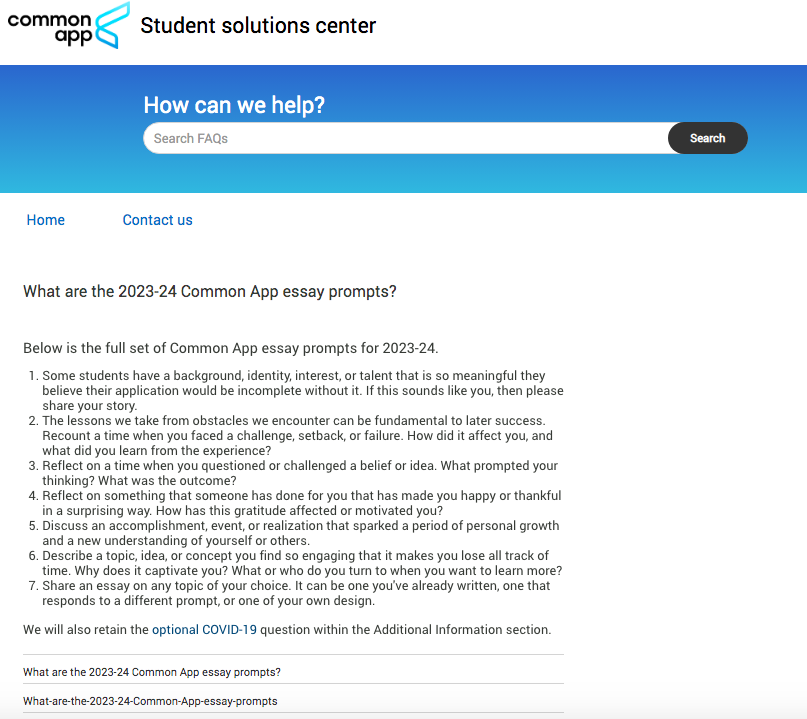
This is the first mention on the Common App’s website that the application’s prompts will remain the same in 2023-2024 as they were in 2022-2023.

As one can see from the image above, the Common App is also maintaining its optional COVID-19 short essay question.

Thus, starting on August 1, 2023 and throughout the 2023-2024 admissions cycle, the seven prompt options first-year applicants will have to carefully choose from in order to write one strong essay of up to 650-words will remain as follows:

  1. Some students have a background, identity, interest, or talent that is so meaningful they believe their application would be incomplete without it. If this sounds like you, then please share your story.
  2. The lessons we take from obstacles we encounter can be fundamental to later success. Recount a time when you faced a challenge, setback, or failure. How did it affect you, and what did you learn from the experience?
  3. Reflect on a time when you questioned or challenged a belief or idea. What prompted your thinking? What was the outcome?
  4. Reflect on something that someone has done for you that has made you happy or thankful in a surprising way. How has this gratitude affected or motivated you?
  5. Discuss an accomplishment, event, or realization that sparked a period of personal growth and a new understanding of yourself or others.
  6. Describe a topic, idea, or concept you find so engaging that it makes you lose all track of time. Why does it captivate you? What or who do you turn to when you want to learn more?
  7. Share an essay on any topic of your choice. It can be one you’ve already written, one that responds to a different prompt, or one of your own design.

In addition, certain counselors who get email newsletters from the Common App received an email late Tuesday confirming that the prompts would stay the same while also mentioning that the Common App wants “to learn more about who is choosing certain prompts to see if there are any noteworthy differences among student populations.”

As this site has previously pointed out, there are vast differences in popularity between prompts among all applicants, which smart and strategic students can and should use to their advantage. Yet, the quote above from the Common App’s counselor email sounds like the Common App could be setting the table for making changes to its prompts in future admissions cycles by arguing that some prompts may be unfair to or create inequitable outcomes for certain demographic populations. The Tuesday email from the Common App to counselors made no mention of the recent proliferation of AI tools such as ChatGPT.

Today’s confirmation of the Common App essay prompts for the 2023-2024 admissions cycle gives the powers that be at the Common App roughly twelve months to decide upon and clarify the reasoning behind making any changes they want to make to the application for the 2024-2025 cycle. This is all happening as higher education administrators and employees in general and undergraduate admissions personnel in particular are currently stuck in a major holding pattern in anticipation of the Supreme Court of the United States’ rulings on affirmative action in college admissions. Those rulings are expected to be delivered by June 2023.

Ultimately, The Common Application serves (and exists) at the pleasure of its college members, as Common App is a non-profit organization that provides a standardized college application platform for roughly 1,000 colleges and universities in the United States and abroad. The Common App allows students to fill out one application form online and submit it to multiple colleges, streamlining the college application process.

While the application includes a variety of components, including basic information about the student, educational history, and an extracurricular activities page, it is the Common App’s essay page that has traditionally caused high school students the most consternation. Some colleges and universities require additional materials through their Common App supplements, such as supplemental essays or portfolios, which can be submitted through the Common App as well.

By using the Common App, students can save time and effort in the college application process and have a more organized and streamlined way of applying to multiple schools. Yet, it’s important to note that not all colleges and universities accept the Common App, and even some Common App member colleges may require additional application materials be submitted after students submit their Common App. A handful of the biggest-name universities in the US have held off massive peer pressure to adopt the Common App: such colleges include MIT, Georgetown, and all colleges that are part of the UC system, such as UC Berkeley, UCLA, and UC Santa Barbara.

Also on Tuesday, the Common App announced that it has created two new senior-level roles for Constituent Engagement and Product. The hires come as the Common App aims to “expand beyond the application to empower more students to access, afford, and attain postsecondary opportunities.”
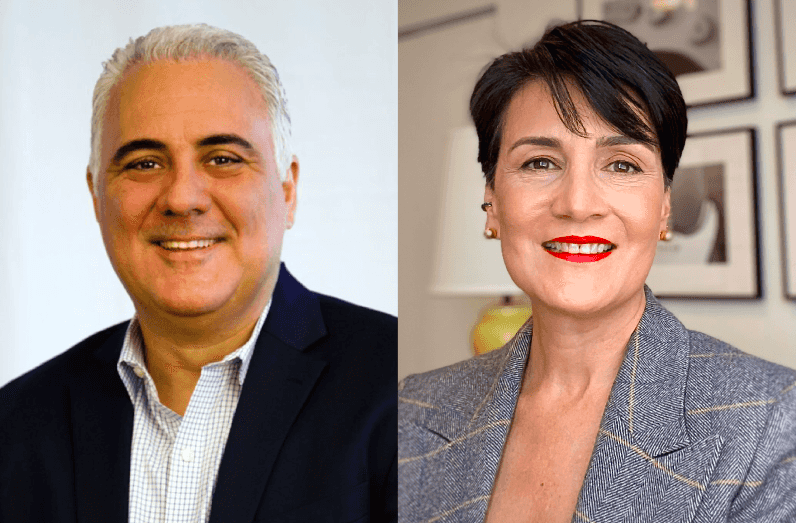
Jonell Sanchez and Dr. Ileana Rodriguez are joining the Common App.

Dr. Ileana Rodriguez will begin on March 14, 2023 as the new Senior Vice President for Constituent Engagement. In her new role, Dr. Rodriguez will lead Common App’s college and university member, student, and counselor engagement, enabling coordination across current constituencies. As Common App expands its services “to support more students, this role will also build relationships with partners in new markets to ensure those services have the desired impact.”

Dr. Ileana Rodriguez joins Common App from Colectiva, LLC. As Founder and CEO, Dr. Rodriguez provided customized strategic consulting services to non-profit organizations to navigate growth and change while advancing diversity, equity, and inclusiveness across all of their systems and practices. Prior to founding Colectiva, Dr. Rodriguez held senior leadership positions at Teach For America, The College Board, and Triton College.

“Educational equity is a centering force for my professional purpose,” said Rodriguez. “I’m excited to be joining Common App as it engages colleges, universities, counselors, teachers, and partners in its pursuit of access and equity in the college admission process, vastly expanding opportunity for all students.”

Jonell Sanchez will begin on March 14 as the new Senior Vice President of Product. In this role, Sanchez will help to identify new products and services and establish strategic partnerships “that will increase the number of underrepresented students who use Common App’s platform–not just to apply for opportunities, but to afford them and complete them successfully.”

Jonell Sanchez joins Common App from Sanchez Strategic Advisors. He provided organizations strategic executive consulting services in product development, business transformation, go-to-market and scaling growth in the U.S. and global for organizations like Educational Testing Service (ETS), Ness Digital Engineering, and others. Prior to joining ETS, Sanchez held senior leadership positions at ACT, the National Student Clearinghouse, Pearson Global, and The College Board.

“Common App’s vision and mission align with my personal experience as a childhood immigrant from Cuba and student from an underserved community and with my professional values and commitment to educational opportunity, access and impact at scale in the U.S. and abroad,” said Sanchez. “I am honored to join the team at this crucial point in the higher education landscape and to help expand Common App’s products and services to lower the barriers to college access and attainment, especially for historically underserved students.”

Sanchez and Rodriguez will join the Common App team as the organization moves into what it refers to as “its next chapter, focused on revolutionizing the entire college-going process to increase equity” with solutions that “show students all of the different opportunities available to them, streamline both the first-year and transfer process, help them pay for those opportunities, shift information and choice to the hands of students and, help organizations and colleges that provide opportunities find and support people to enroll and achieve their personal aspirations.” This comes after Common App launched “Direct Admissions,” which is basically colleges applying to students (as opposed to the traditional students applying to colleges), during the 2022-2023 admissions cycle.
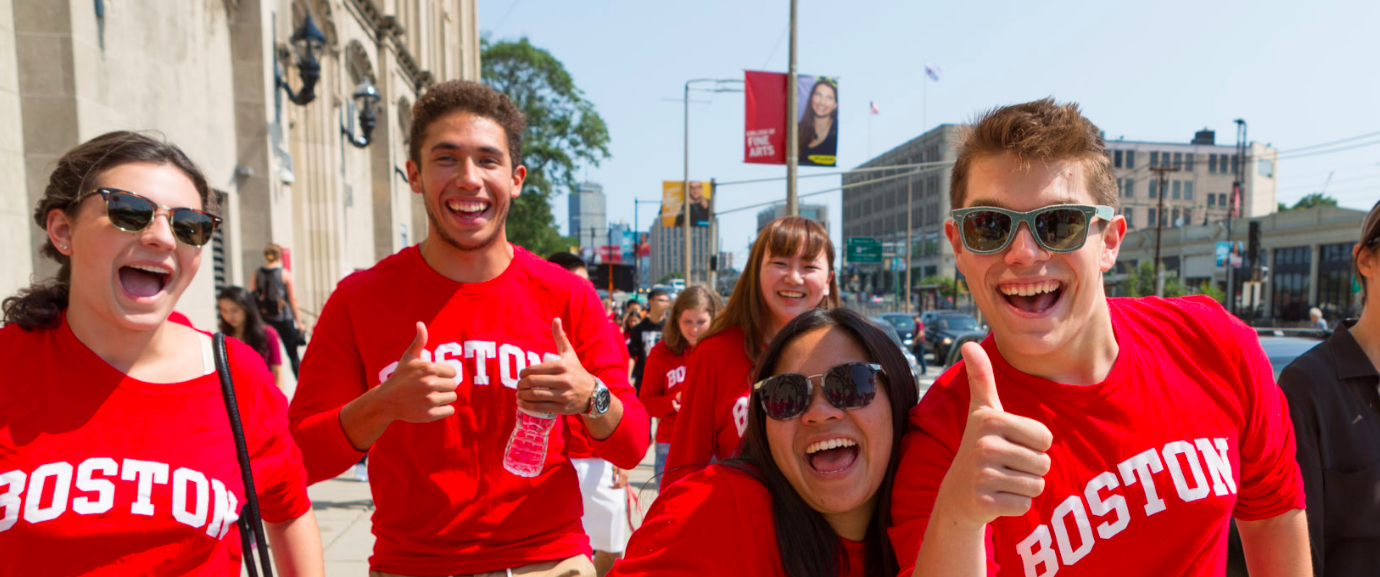
Boston University shares some 2022-2023 admissions statistics

Posted on February 26, 2023 by Craig Meister Leave a Comment

Boston University admissions officers are just about as busy this year as they were last year after receiving 80,484 applications during the 2022-2023 admissions cycle. During the 2021-2022 admissions cycle BU received a record-breaking 80,797 applications from prospective first-year students.
Kelly A. Walter, BU’s Associate Vice President for Enrollment & Dean of Admissions shares that BU received 6,866 applications for admission through Early Decision (ED) and Early Decision 2 (ED2) rounds earlier this cycle, which represents an 8.8% increase over last year. BU expects to enroll approximately 57% of its first-year class through these two binding programs.

Meanwhile, in total, 41.2% of BU applicants indicated an interest in having standardized test scores considered, while applications from students from what BU calls “underrepresented groups” (URG) increased 5.6% over last year and represent 21% of the applicant pool. First-generation college students make up 25% of BU’s applicant pool. Enrollment of first-generation, low-income, and “URG” students continues to be a priority for BU.

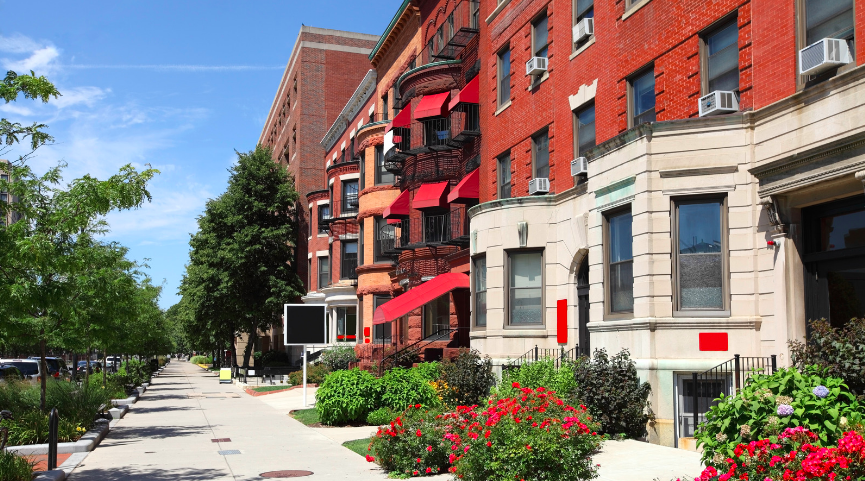
BU’s urban campus in the heart of Boston, MA, USA.

Resources and mentorship from BU’s Newbury Center, a support-hub for first-generation students, along with its College Access & Student Success Office, work to ensure that students from “underrepresented groups” thrive on campus.

BU, being in Boston, is also popular with international applicants. International students submitted 15,788 applications representing 171 countries during the 2022-2023 admissions cycle.

Overall, BU’s enrollment target for the Class of 2027 is 3,100 students. Admission decisions for Regular Decision applicants to the BU Class of 2027 will be released on Saturday, March 25, and students will be alerts of decision availability via email.

Walter also noted that, “This was an especially exciting year as BU opened our new Center for Computing and Data Sciences – a monumental testament to BU’s commitment to innovation, sustainability and collaboration. Housing the faculty of computing and data sciences, which brings together students and faculty with a shared passion for societal impact, the Center is an icon not only for the BU campus, but also for the city of Boston.” Its structure is 100 percent fossil fuel–free, and it is the most environmentally sustainable, energy-efficient building at BU as well as one of the “greenest” buildings in all of New England.

As total application numbers seem to have plateaued, in advance of a Supreme Court decision many observers believe is likely to limit colleges’ ability to consider students’ race in admissions BU has decided to remain test optional for students applying for the fall 2025 and spring 2026 admissions cycles. This is in contrast to nearby MIT, which has already gone back to being test-required for first-year applicants and has made no indication, at least so far, that it will be switching back to test optional.

Tulane Early Decision Applicants Notified of Decisions on December 1

Posted on November 30, 2022 by admissions.blog Leave a Comment

Exciting news just in from Tulane.

The Tulane admissions team is a bit ahead of schedule with reviewing applications and as a result Tulane Early Decision 1 notifications will go out tomorrow, December 1, at 4:00 p.m. Central (New Orleans) Time. Updates will be posted to students’ Green Wave Portal, and physical letters are also on their way.

There is also a bit of a change in what type of decisions students may receive: some ED applicants will be deferred and released from their ED Agreement. In recent years Tulane has focused on simply accepting or rejecting ED applicants. Deferred applicants will be read again in the regular round before getting a final decision in Spring 2023. Such students can also be considered for Tulane’s Spring Scholar cohort. There will be a form on the Green Wave Portal on which a deferred ED student can indicate an interest in the Spring Scholar program.

In past years, Tulane would admit the vast majority of its Spring Scholars at this time. This year, Tulane is admitting a smaller group for now and will reassess when it sees the pool of deferred ED and EA students in the spring. Deferred ED students cannot switch to Tulane’s ED 2 plan.

Meanwhile, Early Action applicants will hear back from Tulane no later than January 15, but Tulane is trying to notify these students of their decisions earlier than scheduled as well.

Notre Dame Now Accepting Summer 2023 Pre-College Program Applications

Posted on October 21, 2022 by Craig Meister Leave a Comment

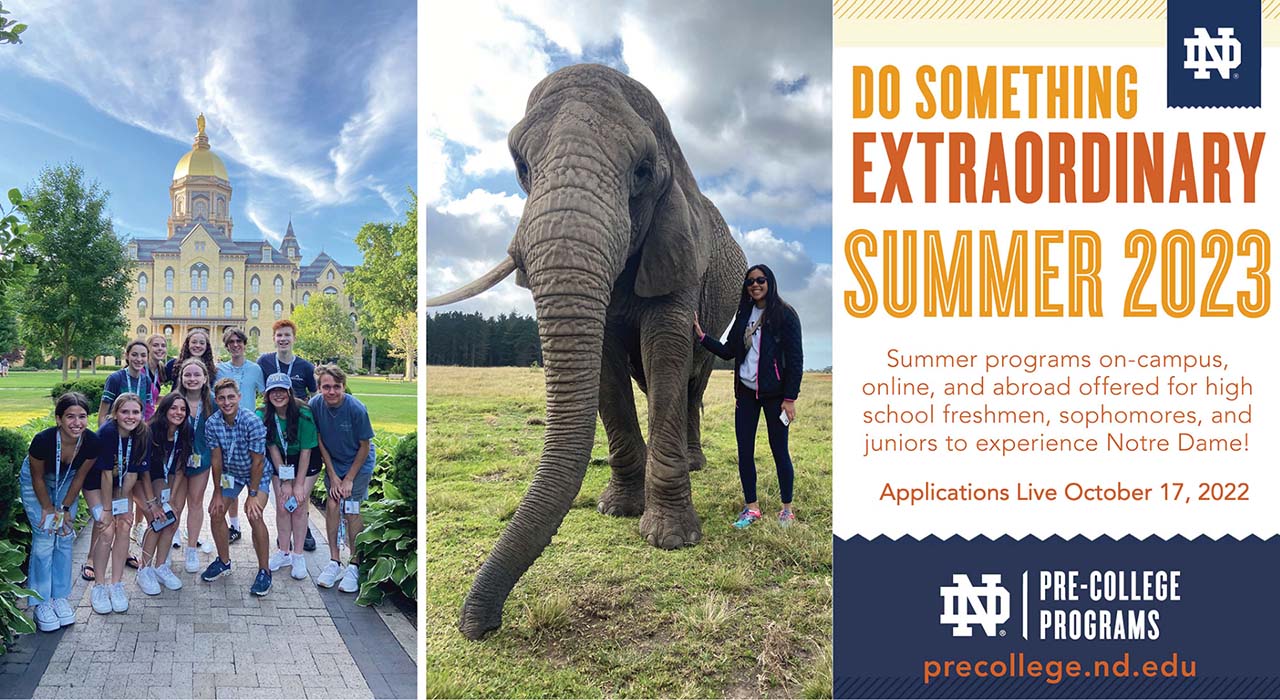
Applications for Summer 2023 programming on University of Notre Dame’s campus, online, and abroad are now live – even though it’s only October 2022!
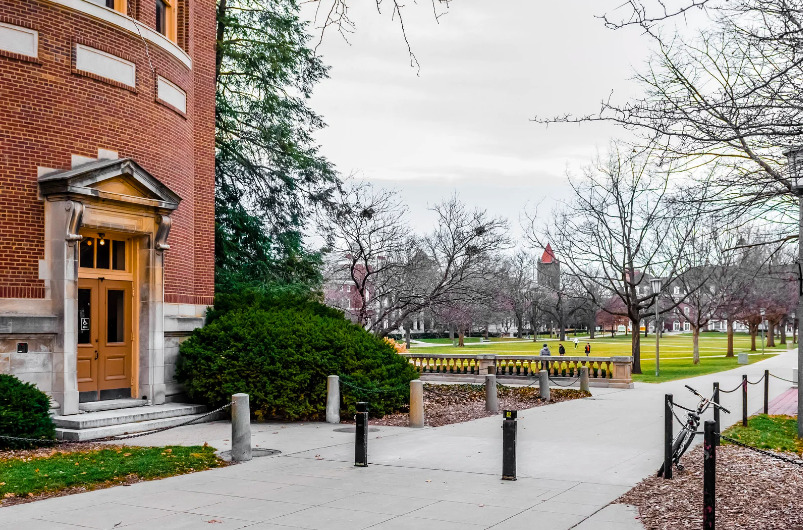
High school freshmen, sophomores, and juniors are eligible to apply for these programs, which introduce participants to college life, give students a chance to earn college credit, and provide Notre Dame a valuable revenue stream. With that said, financial aid and grants are also available.

The selection of programs is quite impressive, and now that the shadow of the pandemic has lifted, I encourage students who are interested to take a serious look at Notre Dame’s impressive international offerings in Italy, South Africa, Ireland, and the United Kingdom. Yet, the Indiana-based and online programming offerings are intriguing as well since they seem to be taught by Notre Dame faculty. The most important consideration of students making summer plans is to engage in challenging opportunities in which they have real interest. Sometimes that interest is new and can’t be explored during the school year. Other times that interest is ongoing and the opportunity represents a new way to pursue it relative to the way the student has pursued it so far. In either case, the student will get more out of the experience if he or she is truly invested in the content the program is going to explore, and Notre Dame certainly provides a lot of content that would be interesting to a lot of students.

Related: How to Avoid Bad-Pre-College Programs

Often the most selective summer programs fill up by December of January; therefore, if certain summer programs with Notre Dame or other universities are of interest to you, remember the oft-repeated maxim, “the early bird gets the worm,” and don’t wait to apply tomorrow – do it today. Good luck.

University of Illinois Urbana-Champaign’s Impressive Acceptance Rate Transparency

Posted on September 13, 2022 by Craig Meister

Let’s face it, these days so much of the world of undergraduate admissions is smoke a mirrors. Which makes it particularly noteworthy when a big institution like University of Illinois Urbana-Champaign goes out of its way to be transparent about the fact that it’s a university made up of many different acceptance rates, not just one top-line number. As this site has pointed out for years, many colleges like to cherry pick data to impress or intimidate, which leaves those in the know to have to explain there’s often more to the story. If only more colleges behaved as transparently as University of Illinois Urbana-Champaign (UIUC)!

Acknowledging that it’s first year on the Common App shook things up quite a bit, UIUC has now officially shared that received over 63,000 applications, during the 2021-2022 admissions cycle, which is a robust thirty-three percent increase over the 2020-2021 admissions cycle, which was UIUC’s last pre-Common App. As a result, UIUC became much more selective statistically: it only admitted admitting forty-five percent of applicants during the 2021-2022 admissions cycle compared to roughy sixty percent of applicants during the 2020-2021 admissions cycle. In fact, Director of Undergraduate Admissions, Andy Borst, shared, “We came in over our original target, and more international students accepted their offer of admission and enrolled than what we anticipated.”

UIUC now publishes its admit rate by college and for its Computer Science-related programs. Check out these numbers for 2021-2022:

College Admit Rates (First-Choice Major Only)

College of Agricultural, Consumer & Environmental Sciences: 42.8%

College of Applied Health Sciences: 45.5%

College of Education: 51.7%

College of Fine & Applied Arts: 49.5%

College of Liberal Arts & Sciences: 49.8%

College of Media: 38.4%

Division of General Studies: 48.9%

Gies College of Business: 27.0%

Grainger College of Engineering: 23.0%

School of Information Sciences: 68.1%

School of Social Work: 46.9%

Computer Science Programs

Computer Science: 6.7%

Computer Science + X Programs: 25.4%

In terms of acceptance rate by residency, another trove of data colleges routinely hide from the general public, UIUC is not shy about laying it all out there:

Residency Applicants Admits Acceptance Rate
Illinois Resident 25,944 14,589 56.20%
Non-Resident 21,216 7,749 36.50%
International 16,097 6,016 37.40%

While UIUC remains test optional, the university also revealed the percentage of applicants who submitted ACT or SAT scores by college. Over seventy percent of accepted Engineering applicants submitted test scores while fewer than thirty percent of accepted Education and Social Work applicants submitted scores. Wow! Even with these vast disparities, the middle fifty percent of accepted Engineering students earned between 1440 and 1530 while the middle fifty percent of Education students earned between 1220 and 1365 and the middle fifty percent of Social Work students earned between 1260 and 1420. Very interesting indeed!

Borst added, “We encourage students to apply for programs in which they plan to enroll, if admitted. We will only consider students for their first-choice major and their second-choice major, if selected. The Division of General Studies is intended for students who are open to exploring more than one major, with preference given to students who are open to exploring programs with capacity on campus. Students who are only interested in intercollegiate transfer once on campus into The Grainger College of Engineering or Gies College of Business should be encouraged to enroll at another university.”

Also of note, due to University of Illinois Urbana-Champaign’s increasing competitiveness, students are now only able to enter the university’s computer science program as new first-year or transfer students. Students will not be able to apply to change majors into computer science once on campus, although they will still be able to pursue a computer science minor or apply to change majors into the computer science & X programs. To learn more about the differences between UIUC’s computer science major and majors similar to it, check out UIUC’s blog on the subject.

While impressed by all this valuable information, I’d also love to know the breakdown of UIUC’s EA and Regular acceptance rates too. Yet, progress is progress, and more colleges that accept by school or program or that have differentiated acceptance rates by residency should follow University of Illinois Urbana-Champaign’s lead in publishing data like this! Thank you Director Borst and University of Illinois Urbana-Champaign for all of your transparency!

Are you interested in University of Illinois Urbana-Champaign? Watch my team’s visit to campus during which we spoke to real UIUC students about their thoughts on the university:

University of Southern California Adds Early Action Admissions Deadline

Posted on September 9, 2022 by admissions.blog Leave a Comment

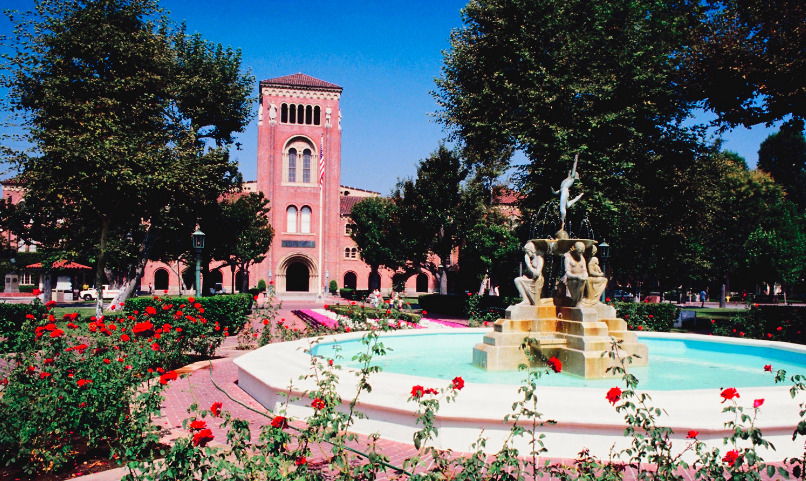
The University of Southern California, a selective private university in Los Angeles, has announced that it is introducing a November 1 Early Action admissions deadline for the 2022-2023 admission cycle.

This is a big change for a university that had long held the line on notifying candidates of their admissions decisions no earlier than spring of each year. Now, those students applying Early Action this fall will learn of their admissions decision by mid to late January 2023.

The new November 1 deadline is non-binding (Early Decision, which USC does not offer, is binding) and non-restrictive, which means that students can apply to other colleges Early Action at the same time. Students can even apply to one other college Early Decision at the same time, but of course would need to commit to their Early Decision college if admitted.

Yet, Early Action is not available for students applying to majors in the School of Architecture, School of Cinematic Arts, Kaufman School of Dance, School of Dramatic Arts, Roski School of Art and Design, Iovine and Young Academy, and Thornton School of Music should. Students applying to these schools should apply by December 1 using USC’s Regular Decision plan.

USC has become increasingly selective since going test optional. During the 2021-2022 admissions cycle, USC, which is the largest private university in California, only accepted roughly twelve percent of first-year applicants.

UC Berkeley Announces Fall 2022 Admissions Updates

Posted on August 25, 2022 by Craig Meister Leave a Comment

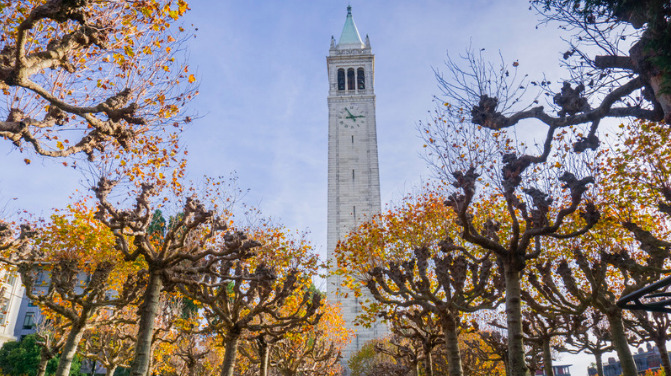
As we head into a new admissions cycle, University of California, Berkeley is announcing some changes in how it will consider applicants.

UC Berkeley is joining the rest of the UC campuses in allowing students to select an alternative major on the UC application. The university encourages students to take advantage of this option, especially if they have a second-choice major they’re interested in. UC Berkeley’s advice remains that students should select the major they are most interested in as their primary major because the university will only guarantee a review of the primary major, while alternative majors will only be used if space is available, for example, as the university considers available space during the wait list process.

In addition, first-year applicants admitted to one of the twelve high-demand majors in the College of Letters and Science will be guaranteed a space in the major. While this will not be a direct admission to the major, the process to declare will be simplified and space will be held for them contingent on certain requirements. Students interested in a high-demand major are encouraged to apply for it on the application, which gives them the best chance of declaring that major. Students who do not select a high-demand major can apply to declare after enrolling at Berkeley, but it will be through a comprehensive review process directly with the major department.

Meanwhile, any student interested in completing a double major will be limited to one high-demand major in the College of Letters and Science. Students who are interested in more than one major are encouraged to add the high-demand major as their primary major on their UC application. More information related to these changes will be posted on this page in the coming weeks.

This news comes as students are encouraged to start their UC application for fall 2022 this month (August), including entering personal information, self-reporting their courses and grades, and drafting their Personal Insight Questions (PIQs).

Like other UC campuses, starting this cycle, the application submission period for UC Berkeley begins on October 1, and the deadline is November 30. This gives students a larger window to submit their applications, as in previous years the application submission window only lasted for the entire month of November. Once the application is submitted students cannot make changes to the application, so they should plan accordingly, and of course, the UC system does not offer Early Action or Early Decision.

Finally, UC Berkeley also has shared news for prospective transfer students. Starting fall of 2023, participating UC Berkeley academic departments will pilot a direct admit to major program in Berkeley’s College of Letters and Science for transfer admits. There will be twenty-seven departments participating in the program including four high-demand majors: Art Practice, Computer Science, Data Science, and Social Welfare.

On the UC application, when selecting the major, the portal will inform students that they are applying directly to the chosen major. If an applicant is admitted to a major participating in this program they will not have to go through the process of applying to or officially declaring their major during their first semester on campus. Transfer admission and major declaration procedures will not change for majors who are not participating in this pilot program. More information will be posted on this page in the coming weeks as details are finalized.

All of these updates come on the heels of an unprecedented year that included a record number of freshmen applicants to UC Berkeley (over 128,000 applicants) and a court ruling that threatened to cap its enrollment numbers. Even so, the selective Bay Area university offered over 19,700 freshmen and transfer students admission.

Davidson becomes more selective in 2022

Posted on March 31, 2022 by Craig Meister

Davidson University in North Carolina has shared its 2021-2022 admissions cycle statistics, which reveal the small and selective school will remain just as small as ever while becoming slightly more selective. Davidson has the goal of enrolling 530 first-year students for the fall 2022 semester.

Of an overall 6,487 students who applied to Davidson this year, only 1,090 were accepted, 335 of which were accepted through Early Decision 1, Early Decision 2, athletic recruitment, or partnerships with access organizations such as QuestBridge and POSSE. This overall 16.8 percent acceptance rate during the 2021-2022 cycle compares to a 17.1 percent acceptance rate during the 2020-2021 cycle and a 19.5 percent acceptance rate during the 2019-2020 cycle, which was the last time Davidson required all applicants submit their SAT or ACT scores. This cycle only 48 percent of students submitted their test scores though no stats were provided on what percentage of admitted students submitted their test scores this time around. Davidson committed a test-optional policy as a three-year pilot; therefore, it will continue for one more cycle as the university tracks and analyzes data related to test-optional admissions and student performance.

Other statistics shared include that of admitted students, 12 percent will be the first in their family to attend college; 29 percent are domestic students of color; and 10 percent are international students/non-US citizens.

Regular Decision notifications were released on March 26, 2022, and students have until May 1 to deposit.

Davidson University Admissions Stats c/o 2024 c/o 2025 c/o 2026
Total First-Year Applicants 5,615 6,422 6,487
Total Admitted (not including wait list) 1,096 1,101 1,090
Admitted through ED1/ED2/Athletics/Partnerships 289 326 335
Defers from prior year 5 13 9
Percent reviewed with Test Scores 100% 50% 48%
First Generation Students (admitted) 99 123 132
International Students/Non-US Citizens (admitted) 88 83 105
Domestic Students of Color (admitted) 305 344 319

15 Liberal Arts Colleges Join Forces for Virtual Fair on the 15th

Posted on February 15, 2022 by Craig Meister Leave a Comment

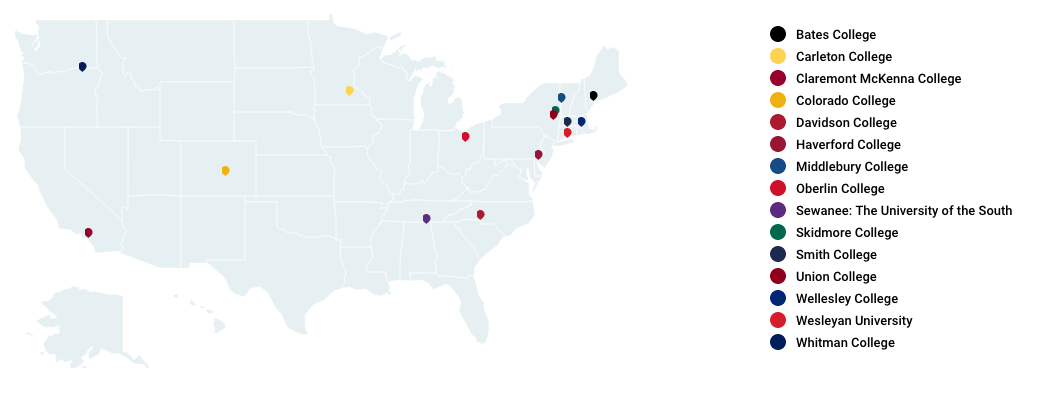
Fifteen American liberal arts colleges are getting together for another year of what they are calling 15 on the 15th — a monthly virtual college fair.
Designed for international prospective students and counselors, the goal of 15 on the 15th is to provide the opportunity for students to get to know the fifteen participating institutions in-depth and at their own pace.

On the fifteenth day of each month, from March through December 2022, these fifteen colleges – including Bates College, Carleton College, Claremont McKenna College, Colorado College, Davidson College, Haverford College, Middlebury College, Oberlin College, Sewanee: The University of the South, Skidmore College, Smith College, Union College, Wellesley College, Wesleyan University, and Whitman College – will come together to offer “15 minutes of Tips” for the college application process followed by an hour-long virtual college fair. Each institution will have its own Zoom room for students to meet with an international admission officer and a current student or alum. The format will be the same every month yet there will be different opening topics and tips. This represents a great education and networking opportunity for students.

Those interested in participating should register here.

15 on the 15th: Liberal Arts College Across the U.S.
Virtual College Fair
9:45 a.m. – 11 a.m. Eastern Time
15th each month, March through December, 2022

Those interested only need to register once. Before each college fair registrants will receive a reminder email with the Zoom links to access the main webinar and each college’s room.

The 15 on the 15th website also includes each institution’s international admission officer’s contact information and links to school-specific virtual program offerings.

Notre Dame Accepts Only 17% Early Action As Record Number Apply

Posted on December 17, 2021 by admissions.blog 1 Comment

University of Notre Dame saw the number of students who applied via its Restrictive Early Action (REA) plan skyrocket this fall. A record 9,683 students applied to Notre Dame Restrictive Early Action in 2021. In 2020 7,744 students applied to Notre Dame Restrictive Early Action. That represents an over 25% increase in just one year.  Those applying to Notre Dame Restrictive Early Action have until May 1 to deposit and were able to apply to other colleges with Early Action programs but they were not allowed to apply concurrently via other colleges’ binding Early Decisions plans.
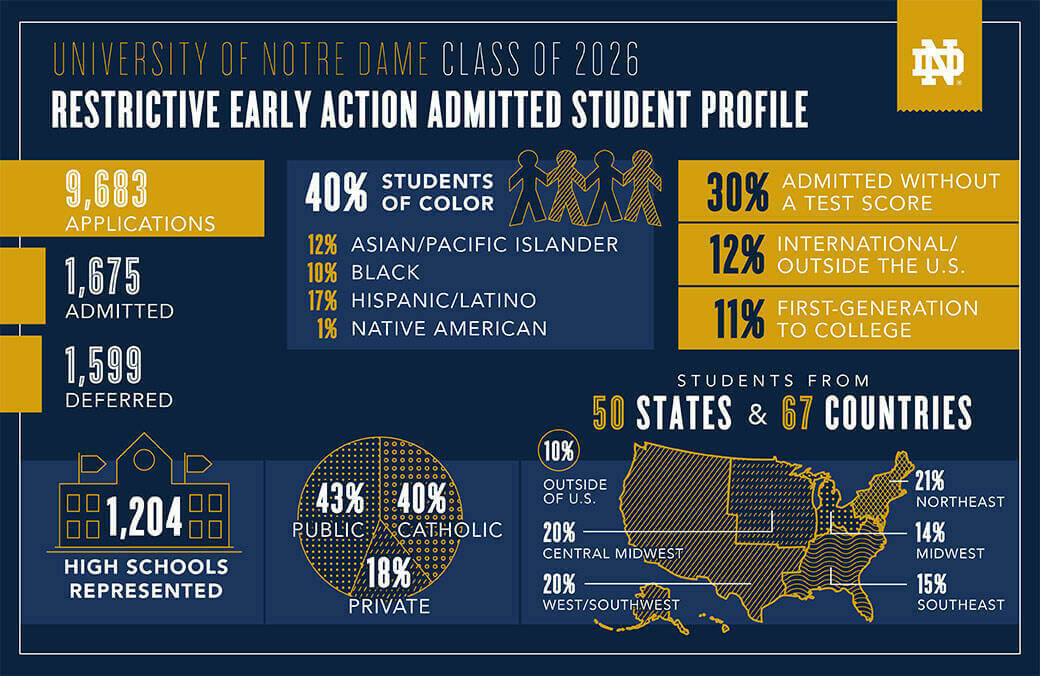
Yet, despite far larger numbers of REA applications to review, Notre Dame only accepted two more students REA in 2021 than it did in 2020; Notre Dame accepted 1,673 REA applicants in 2020 versus 1,675 REA applicants in 2021. This means that Notre Dame’s Restrictive Early Action acceptance rate dropped from roughly 22% to 17% in just one year, which helps bolster Notre Dame’s place in the realm of hyper-selective U.S. universities.

Meanwhile, a full 30% of REA applicants were accepted without submitting scores from the ACT or SAT. This is a huge change from just two years ago when scores from either the ACT or SAT were required of all admitted applicants. A full 46% of REA applicants to Notre Dame in 2021 applied without submitting test scores.

Unusual among many other selective U.S. universities, Notre Dame also shared that of those students accepted Restrictive Early Action in 2021 there are roughly even numbers of Asians/Pacific Islanders (12%), International students (12%), and Black students (10%).

Notre Dame released REA admissions decisions on Thursday, December 16, 2021, at 6:42 p.m. Eastern Standard Time, in a nod to the university’s founding year of 1842. Of the admitted student pool, 1,204 high schools are represented, including 43% public, 40% Catholic, and 18% private. A full 26% of accepted students indicated intended majors in the College of Arts and Letters, 22% in the College of Engineering and School of Architecture, 24% in the Mendoza College of Business, and 28% in the College of Science.

Typically, Notre Dame admits between 1,600 and 1,800 in its REA pool and a larger number in its Regular Decision pool, which this year has an application deadline of January 1, 2022. Last year, 1,768 students who were deferred during the REA round eventually earned admission during the Regular Decisions admissions cycle. This year, 1,599 REA applicants were deferred.


  • « Previous Page
  • 1
  • …
  • 7
  • 8
  • 9
  • 10
  • 11
  • …
  • 13
  • Next Page »

Subscribe to our mailing list

Trending Posts

Building Your Best College List

How to Deal with Anxiety During College Admissions (Especially Now)

Comparing Undergraduate Life at University of Oklahoma and Oklahoma State University

ACT Mastery Begins with a Schedule: The Importance of Structured Studying

Another Reason Why Your Common Application Essay is So Bad

University of Miami Just Made It Easier to Apply – But Harder to Get In

The 5 Most Ridiculously Underrated Colleges in America

Make the most of a college visit this spring

How to get into the Ivy League – Ethically

2025 Admissions Cycle Brings Change at US Naval Academy

Top 20 Undergraduate Business Programs at Mid-Sized Colleges in the U.S. South

The top 23 songs to listen to while completing your college applications are…

8 Ways to Reduce the Cost of College

Most Overrated Private University and Public University in America

10 Best Colleges for Smart Skiers and Snowboarders in North America

Dear 11th Grader: Don’t Screw Up Your Ivy League Chances Now

Which California public universities receive the most applications?

This is what Affirmative Action and Test-Optional looks like at University of Wisconsin-Madison

USC Expands Early Decision, Eliminates Common App Courses & Grades Section for First-Year Applicants

Tulane’s acceptance rate is 13%. Only 34% are male.

Wesleyan University Ends Legacy Preferences in Admissions

Rolling Admission vs. Regular Decision

Top 5 Ways Applying to US Colleges is Different than Applying to UK Universities

Oh, Canada! The Definitive List of Canadian University Application Deadlines

30 Summer STEM Camps for High School Freshmen

12 Reasons Scattergrams Lull Students Into a False Sense of Security

UNC and a tale of one – make that four – acceptance rates

You CAN apply Restrictive Early Action and Early Action under the right conditions

The Perfect Gifts to Celebrate Getting Into College

Search Posts By Topic

  • 3 Year Degree (3)
  • Accommodations (3)
  • Admissions Policies (133)
  • Admissions Statistics (90)
  • Advice & Analysis (482)
  • AI (1)
  • Alabama (2)
  • Amherst (3)
  • AP (6)
  • Applications (93)
  • Applying from India (1)
  • Arizona (4)
  • Arts (1)
  • ASU (1)
  • Austin College (1)
  • Babson (1)
  • Baylor (1)
  • Berry College (1)
  • Boston College (2)
  • Boston University (6)
  • Bowdoin (2)
  • Brown (6)
  • Bryn Mawr (1)
  • Business (2)
  • BYU (1)
  • Caltech (6)
  • Canada (2)
  • Career and Technical Education (34)
  • Case Western (4)
  • China (1)
  • CMC (1)
  • Coalition (13)
  • Colby (3)
  • College Costs (1)
  • College Counselor (18)
  • College Fairs (5)
  • College Life (38)
  • College List (40)
  • College List Deathmatch (5)
  • College Visit (26)
  • Colorado College (1)
  • Colorado School of Mines (1)
  • Columbia (7)
  • Common App (43)
  • Community Colleges (4)
  • Cornell (5)
  • Counseling (3)
  • COVID-19 (8)
  • CSS PROFILE (3)
  • CSU (1)
  • CSULB (1)
  • CU Boulder (2)
  • Cybersecurity (1)
  • Dartmouth (7)
  • Davidson (1)
  • Demonstrated Interest (17)
  • DePaul (1)
  • Dickinson (1)
  • Direct Admissions (1)
  • Duke (3)
  • Early Action (44)
  • Early Childhood Education (1)
  • Early Decision (46)
  • Education (8)
  • Educational Consulting (1)
  • Elon (2)
  • Emergency Management (1)
  • Emory (1)
  • Engineering (3)
  • Enrichment (18)
  • Entrepreneurship (2)
  • Environmental Science (2)
  • Essays (59)
  • Europe (7)
  • Exercise Science (1)
  • Exeter (1)
  • Experiential Learning (1)
  • Extracurricular Activities (37)
  • FAFSA (6)
  • Feature (2)
  • Financial Aid (31)
  • First Person (13)
  • Fly-In (2)
  • France (1)
  • FSU (1)
  • Gap Programs (2)
  • GED (1)
  • Georgetown (5)
  • Germany (2)
  • Gifts (3)
  • Gonzaga (1)
  • GPA (8)
  • Graduate School (22)
  • Hamilton (1)
  • Harvard (7)
  • Healthcare (3)
  • High School (25)
  • Higher National Diplomas (1)
  • HiSET (1)
  • IB (4)
  • IEC (1)
  • IELTS (1)
  • Indiana (3)
  • Industrial Hygiene (1)
  • International (9)
  • Internships (8)
  • Interviews (10)
  • Iowa (2)
  • Italy (2)
  • Ivy League (20)
  • JHU (3)
  • Journalism (2)
  • Kettering University (1)
  • Lafayette (1)
  • Law (4)
  • LD (1)
  • Lists & Rankings (8)
  • Loans (1)
  • Majors (18)
  • Marketing (1)
  • Math (1)
  • Medicine (1)
  • Mental Health (3)
  • Miami (1)
  • Middlebury (1)
  • MIT (7)
  • Montana State University (1)
  • Moving (1)
  • Naviance (2)
  • NCAA (3)
  • New Mexico State University (1)
  • News (129)
  • Northwestern (5)
  • Notification News (4)
  • Notre Dame (3)
  • Nursing (19)
  • NYU (3)
  • Of Note (17)
  • Ohio State (2)
  • Oklahoma (1)
  • Online Learning (18)
  • Open Admission (2)
  • Parents (7)
  • Penn (8)
  • Pharmacy (1)
  • Pitt (2)
  • Popular Posts (10)
  • Princeton (5)
  • Priority (2)
  • Professor of the Month (1)
  • PSU (3)
  • Psychology (3)
  • Public Universities (8)
  • Purdue (3)
  • Rankings (11)
  • Reader Questions (11)
  • Recommendations (10)
  • Regular (26)
  • Research (4)
  • Resume (20)
  • Rice (4)
  • Robotics (1)
  • Rochester (1)
  • ROI (5)
  • Rolling (5)
  • Rose-Hulman Institute of Technology (1)
  • Santa Clara University (2)
  • Scholarships (2)
  • SEL (1)
  • Sewanee (1)
  • Skiing & Snowboarding (1)
  • SMU (1)
  • Social Work (10)
  • Soft Skills (1)
  • South America (2)
  • Southwestern (TX) (1)
  • Spotlight Series (1)
  • SRAR/SSAR (1)
  • St. Edward's University (1)
  • St. John's College (1)
  • Standardized Tests (45)
  • Stanford (4)
  • STEM (2)
  • Stevens Institute of Technology (1)
  • Student Trips (1)
  • Summer (24)
  • Swarthmore (1)
  • Syracuse (1)
  • TASC (1)
  • Teacher Recommendations (8)
  • Temple (1)
  • Texas (4)
  • Texas A&M (1)
  • Ticker (26)
  • Trending Posts (35)
  • Trinity University (TX) (1)
  • Tufts (5)
  • Tuition (3)
  • Tulane (8)
  • UBC (1)
  • UC Berkeley (9)
  • UC Davis (3)
  • UC Santa Barbara (3)
  • UCAS (5)
  • UCF (1)
  • UCI (2)
  • UCLA (9)
  • UCSD (2)
  • UDub (1)
  • UF (4)
  • UGA (3)
  • UIUC (3)
  • UMass (3)
  • UMD (5)
  • UNC (2)
  • United Kingdom (8)
  • Universal College Application (1)
  • University of Chicago (3)
  • University of Dallas (1)
  • University of New Mexico (1)
  • University of Rochester (1)
  • University of Vermont (1)
  • USC (5)
  • USNA (1)
  • UT Austin (4)
  • Utah (2)
  • UVA (7)
  • Vanderbilt (2)
  • Video Game Design (1)
  • Villanova (3)
  • Virtual Information Session (1)
  • Virtual Visit (2)
  • Wake Forest (1)
  • Wash U (7)
  • Wesleyan (2)
  • Williams (3)
  • Wisconsin (3)
  • Work Study (1)
  • Yale (14)
  • ZeeMee (1)

News Tips | Write for Us | Sponsored Posts
All content © 2025 | Admissions.Blog
Terms of Service | +1 410-526-2558

Copyright © 2026 · Metro Pro Theme on Genesis Framework · WordPress · Log in